Used Okamoto IGM-15NC CNC Internal Grinder: High-Precision Bore Finishing
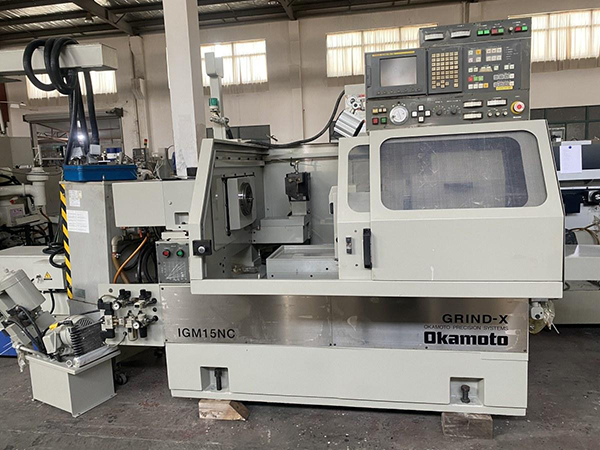 This used Okamoto IGM-15NC CNC Internal Grinder is in stock and available for immediate inspection. Engineered for high-precision bore grinding, this unit features a 10,000–60,000 RPM spindle and a 6–100 mm grinding capacity. It offers a flexible, reliable solution for shops requiring consistent, tight-tolerance internal finishing. With its compact footprint and legendary Japanese build quality, this machine is ready to integrate into your production line and increase throughput for small-to-medium precision components.
Suitable Parts and Typical Industries
The Okamoto IGM-15NC is built for versatility, making it a workhorse for shops managing a high mix of precision components. Its 6 mm to 100 mm bore capacity bridges the gap between micro-component processing and medium-sized industrial part finishing.
Automotive and Powertrain
This machine is frequently used for grinding internal bores in gears, bushings, and fuel injection components. The high-speed spindle delivers the surface finish quality demanded by automotive OEMs.
Hydraulic and Pneumatic Systems
For valve bodies, cylinder sleeves, and pump housings, the IGM-15NC provides the geometric accuracy required for proper sealing and fluid flow. The machine’s rigid Okamoto design minimizes vibration—essential when processing hardened steel hydraulic components.
Aerospace and Medical Devices
The machine’s precision is ideal for smaller aerospace housings and medical instrument parts. The CNC control ensures batch-to-batch consistency, minimizing scrap rates on high-value materials.
Best-Fit Processes and throughput requirements
The IGM-15NC is built for shops that prioritize quality and repeatability. Its specifications are optimized for these production scenarios:
- High-Speed Finishing: With a grinding spindle speed reaching 60,000 RPM, this machine is ideal for small-diameter bores where high surface feet per minute (SFM) are required to achieve a mirror-like finish.
- Taper Grinding: The -5° to +15° swivel range provides the flexibility to grind tapered internal bores, a common requirement for bearing seats and specialized hydraulic fittings.
- Batch Consistency: The CNC architecture allows for rapid setup changes between part numbers, making it an excellent candidate for shops running medium-to-high volume batches of similar part families.
- Precision Bore Sizing: The 300 x 500 mm axis travel offers sufficient clearance for a wide variety of workpieces, ensuring the machine is not limited to a single part geometry.
what kind of operation this machine fits
This machine is an ideal fit for facilities needing a reliable, versatile internal grinder. It is particularly effective in:
- Tier 2 and Tier 3 Automotive Suppliers: Shops that need to produce precision bores in hardened steel gears or bushings without investing in multiple specialized machines.
- Job Shops: Facilities that handle diverse contracts and need a machine capable of switching quickly between different bore diameters and lengths.
- Precision Tooling Departments: In-house machine shops within larger manufacturing plants that need to produce custom jigs, fixtures, or replacement parts for their own production lines.
If your production floor is currently bottlenecked by internal grinding capacity, or if you are looking to replace an aging, less precise unit, the Okamoto IGM-15NC offers an excellent balance of footprint efficiency (2800 x 2240 mm) and operational capability.
Why This Machine Works in These Scenarios
The value of the Okamoto IGM-15NC lies in its balance of high-speed performance and structural rigidity. The 12 kVA power rating provides sufficient torque for standard grinding, while the 60,000 RPM spindle head is the key to its versatility.
| Feature | Production Benefit |
|---|---|
| 10,000–60,000 RPM Spindle | Allows for optimal surface speed across a wide range of bore sizes (6–100 mm). |
| -5° to +15° Swivel | Enables complex taper grinding without secondary setups. |
| 300 x 500 mm Travel | Accommodates a broad spectrum of part lengths and diameters. |
| Compact Footprint | Maximizes floor space utilization in crowded job shops. |
Frequently Asked Questions
Q: Can this machine handle both small bores and medium-sized diameters?
A: Yes. The IGM-15NC is designed with a grinding bore capacity of 6–100 mm, making it highly versatile for shops that process a variety of part sizes, from small bushings to medium-sized housings.
Q: Is the high-speed spindle suitable for all types of grinding wheels?
A: The 60,000 RPM capability is designed for high-precision finishing. We recommend consulting the machine's operational guidelines regarding the specific abrasive types and wheel diameters compatible with this spindle speed range.
Q: How does the swivel angle affect my production capabilities?
A: The -5° to +15° swivel range allows you to perform taper grinding directly on the machine. This eliminates the need for specialized tooling or secondary operations to achieve tapered internal geometries.
Q: Is this machine suitable for high-volume production lines?
A: The IGM-15NC is a CNC-controlled machine capable of consistent, repeatable performance. It is well-suited for medium-to-high volume batches, provided the loading and unloading process is optimized for your specific part cycle time.
More Articles
-
How to Choose an Industrial Drilling Machine: Types and Key SpecificationsStart with the Hole and Workpiece Requirements Choose an industrial drilling machine by matching hole diameter, depth, material and production volume to the machine’s drilling process and working envelope. Maximum drilling diameter alone is insufficient: it must be stated for the relevant material and tooling. Prepare a representative drawing showing blind or through holes, depth-to-diameter ratio, positional tolerances, surface finish and any intersecting holes. Include workpiece dimensions, weight and fixture height. These determine spindle access, required travel and chip evacuation needs. Match the Drilling Machine Type to the Job Machine type Typical application Key parameters Upright drilling machine General drilling in parts positioned beneath a fixed spindle axis Material-specific diameter capacity, spindle stroke, throat depth Radial drilling machine Large or heavy components where moving the drilling head reduces workpiece repositioning Arm reach, column-to-spindle distance, head height and clamping rigidity Deep-hole drilling machine Holes requiring dedicated guidance and controlled chip evacuation, such as shaft bores Diameter/depth range, drilling system, coolant pressure, flow and filtration CNC drilling machine Repeated hole patterns requiring programmed positioning and feed cycles Axis travels, positioning accuracy, repeatability and fixture capacity These categories can overlap: a deep-hole drilling machine may use CNC control. CNC describes control capability; it does not establish deep-hole capacity or guarantee suitability for every drilling process. Verify the Specifications Under Cutting Conditions Speed, torque and feed: Match the speed range to tool diameter and material. Large drills need sufficient torque at low speed; motor power alone does not confirm this. Check feed range and available thrust. Usable depth and clearance: Separate spindle stroke from maximum drilling depth. Allow for drill length, holder, fixture, chip clearance and tool withdrawal. Workholding and access: Verify table load, mounting features and the full machining envelope. On radial machines, assess rigidity at the required arm extension. Coolant and chip removal: Confirm compatibility with the selected tooling. Deep-hole systems require matched guidance, coolant delivery and filtration; adding coolant pressure alone does not convert an upright drill into one. Ask the supplier to document capability against your drawing, material and tooling. Where practical, request a representative cutting trial measuring hole size, location, straightness and finish against the drawing requirements. Drilling Machine Selection FAQ When should I choose radial instead of upright? Choose radial when a large or heavy workpiece is difficult to reposition and the head can reach the required holes with adequate rigidity. When is a dedicated deep-hole machine necessary? When depth, straightness or chip evacuation requirements exceed the validated capability of conventional drilling. Confirm suitability with the tooling supplier and machine supplier. Does CNC control guarantee hole accuracy? No. Axis positioning is only one factor. Runout, drill deflection, workholding and material also affect the finished hole.
-
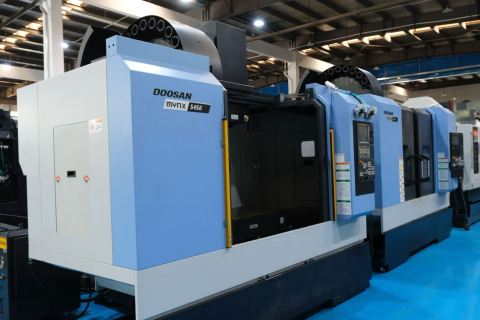
Doosan CNC Machines: Machine Types, Applications and Used Equipment GuideChoosing among Doosan CNC Machines starts with the part: rotational components generally suit a turning center, while prismatic parts typically require a machining center. For used equipment, the exact configuration and measured condition determine suitability more reliably than the series name or production year alone. Match Doosan machine families to the work PUMA and LYNX turning centers, DNM vertical machining centers and NHP horizontal machining centers are useful starting points for comparison. Capabilities vary by model and generation; confirm the machine’s serial number, specification sheet and installed options. Machine family Typical task Used-equipment review CNC turning centers Shafts, bushings and automotive flanges Spindle condition, chuck operation, turret indexing and tailstock alignment where fitted Turning centers with milling capability Turned parts requiring cross-holes, flats or secondary milling Live-tool drive, C-axis operation and any fitted Y-axis or subspindle Vertical machining centers Brackets, plates, fixtures and mold components Spindle taper, axis motion, tool changer and table condition Horizontal machining centers Multi-face machining of housings and valve bodies Pallet positioning, rotary indexing, spindle condition and chip evacuation Check capacity against the complete process For turning, verify usable turning diameter and length, bar capacity, workholding clearance and support for slender parts. Milling features require the appropriate driven tools and axes; a turret alone does not establish milling capability. For machining centers, assess travel with the fixture and tool installed, table or pallet load limits, spindle characteristics and tool capacity. Automotive housings may benefit from horizontal access and pallet handling, while varied fixture work may suit a vertical layout. Confirm material, cutting strategy and cycle requirements before selecting either. Make used-machine condition verifiable Request maintenance records, alarm history, operating-hour information and details of spindle, ballscrew or control repairs. Hours provide context but do not establish accuracy or remaining service life. Arrange a powered inspection covering cold startup, spindle operation through the intended speed range, full axis travel, lubrication, coolant and repeated tool or turret changes. A representative test cut, measured against agreed criteria, provides stronger evidence of process suitability than an idle-running video. Use geometric or positioning checks where the application warrants them. Before committing, confirm control version, enabled options, parameter backups, manuals, electrical requirements and locally available service support. Obtain a written list of included chucks, holders, probes and accessories, then account for rigging, freight, installation and commissioning. Buyer FAQ Can a Doosan lathe replace a machining center? For some turned parts with secondary milling, a suitably equipped turning center can consolidate operations. Check tool access, axis configuration and work envelope against the actual drawing. What is the main risk when buying used? Unverified mechanical condition or missing functionality can prevent the machine from meeting the intended process. Make acceptance depend on documented configuration, inspection results and agreed test criteria.
-
CNC Machines for Automotive Manufacturing: Types, Applications and SelectionSelect CNC machines for automotive manufacturing by matching each component’s geometry, material and critical features to its machining sequence. Engine blocks need access to multiple faces and accurate bore relationships; transmission shafts need controlled turning, with separate finishing operations where the drawing requires them. Machine travel alone does not establish process suitability. Match the automotive component to the machine family Automotive component Machining need CNC machine family Engine blocks and cylinder heads Face milling, drilling, tapping and boring Horizontal or vertical machining center; five-axis where access justifies it Transmission shafts and gear blanks Turn journals, shoulders and bores CNC lathe or turning center; grinding where specified Transmission and differential housings Machine bearing seats, joint faces and hole patterns Horizontal machining center or vertical machining center with rotary indexing Wheel hubs and brake discs Turn faces, diameters and bearing seats; drill mounting holes CNC turning center, with live tooling where suitable Gear blanks can be turned on a lathe, but gear teeth generally require dedicated cutting or finishing equipment. Likewise, cylinder bore preparation may require honing after machining. Engine parts: prioritize access, datums and bore quality For blocks and heads, assess whether the fixture exposes the required faces while maintaining consistent datums. A horizontal machining center can support machining on multiple faces and chip evacuation; a vertical machining center may suit accessible features and flexible batch work. Five-axis capability is useful when angled features or reduced refixturing justify the added programming and fixture complexity. Match spindle torque, tooling and coolant delivery to the material and operation. Deep drilling, interrupted milling and precision boring impose different demands. Confirm bore geometry, surface finish and positional relationships through a representative process trial. Transmission parts: connect turning to downstream operations For shafts, evaluate chuck or collet grip, unsupported length, tailstock or steady-rest requirements, and tool access. Live tooling can combine cross-drilling or milling with turning when the machine configuration supports those features. Plan heat treatment before selecting the final machining route: distortion can require finish grinding or hard turning afterward. For housings, check bearing-bore alignment and fixture-induced deformation. Thin walls may need controlled clamping and a staged roughing and finishing sequence. Validate cycle time with loading, tool changes, gauging and chip removal included. Automated handling and in-process probing must suit the part and control system; neither establishes production capability without validation. Application questions before specifying equipment Can one machining center complete an engine block? It may perform many cutting operations, depending on access, fixtures and tooling. Honing, washing and inspection may remain separate stages. Is a CNC lathe enough for transmission components? It suits rotational features, but splines, gear teeth and specified finishes may require additional equipment. Build the routing from the finished drawing, then verify each proposed machine against its assigned operations.
-
How to Buy Used Industrial Machinery from Overseas SuppliersTo buy used industrial machinery from overseas suppliers, tie each payment commitment to evidence: machine identity, operating condition, agreed acceptance criteria and shipping responsibilities. A low purchase price can become expensive if dismantling, import eligibility or unloading requirements remain unresolved. Screen the seller and identify the machine Confirm the supplier’s legal entity, physical address, authority to sell and relationship to the payment beneficiary. Independently verify any bank-detail change through an established contact. Request the machine’s nameplate, serial number, location, controller details, maintenance records and included-equipment list. Match these across the quotation, inspection records and contract. For CNC equipment, verify electrical requirements, control language, parameter backups and any software licence transfer restrictions. Turn machine evidence into acceptance criteria Agree on a written inspection scope before paying a deposit. For a machining center or CNC lathe, request a live video session showing the serial plate, cold startup, alarm history, axis travel, spindle operation, lubrication and tool changes where applicable. Define any cutting test and measurement method around your intended parts. Procurement stage Evidence Risk-control action Machine verification Nameplate, records, accessory list Record the serial number and included items in the contract. Remote inspection Live operation and test results Set acceptance criteria; investigate unexplained faults. Payment Signed contract and milestone records Define release conditions and rejection remedies. Dispatch Packing photos and shipping documents Check identity, protection and document consistency. Video can reveal operational problems but cannot establish geometric accuracy or hidden wear by itself. Where these affect production suitability, commission an independent inspection with suitable measuring equipment. Negotiate payment around documented milestones Specify the deposit, balance-payment trigger, inspection rights, defect handling, cancellation terms and dispute jurisdiction. State whether acceptance occurs before dismantling or after installation, and how discrepancies will be resolved. Compare bank transfers, documentary credits and escrow arrangements with your bank or adviser. Each has costs and limitations; document compliance alone does not establish machine condition. Assign shipping and export responsibilities Use a named place and Incoterms® 2020 rule, then separately allocate dismantling, lifting, packing, loading, export clearance, insurance and destination unloading. Incoterms do not determine ownership transfer or payment terms. Confirm packed dimensions, weight, lifting points, transit restraints and corrosion protection before booking freight. Have a customs broker check classification, used-equipment import restrictions, required documents and applicable duties under local rules. Budget for rigging, storage and commissioning; customs release and transit timing remain subject to external conditions. Overseas purchasing FAQ Should I pay the full balance before shipment? Negotiate a trigger linked to agreed inspection acceptance and dispatch evidence. Confirm your contractual remedies before committing funds. Can remote inspection replace an onsite visit? It can support initial screening. Precision-critical or poorly documented machines warrant independent onsite checks. Who handles export logistics? The contract should name the responsible party for each task, including document preparation, export clearance, loading and insurance arrangements.