
Used Sodick ALN600QS Wire EDM: Specifications and Production Fit
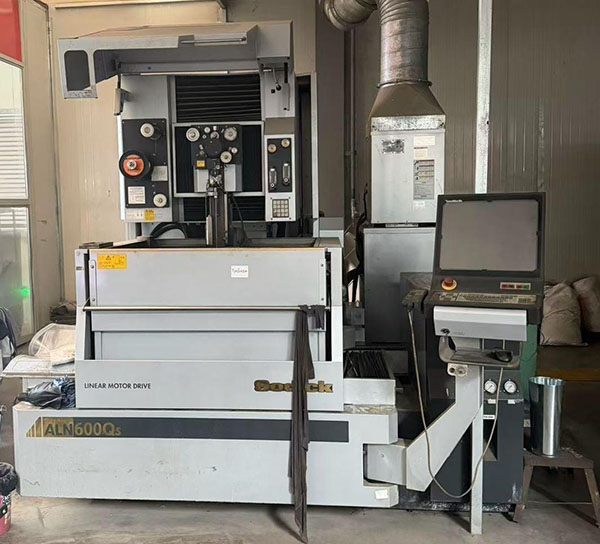 The used Sodick ALN600QS Wire Electrical Discharge Machine (Wire EDM) is a highly capable, versatile system designed to immediately expand your shop's capacity. Manufactured in Japan in 2018 (Stock Number: 811723), this machine is in stock and ready for immediate shipment and integration into your production floor. Featuring a generous X/Y/Z travel of 600 × 400 × 350 mm and an exceptionally large U/V travel of 150 × 150 mm, it is engineered for intricate mold making, aerospace components, and precision stamping dies. By evaluating these core specifications against your tooling requirements, procurement managers and process engineers can see how this ready-to-ship EDM offers a cost-effective way to scale precision machining capabilities—bypassing the long lead times of new equipment.
Core Specifications and What They Mean in Production
Understanding the technical parameters of the Sodick ALN600QS is critical for determining its suitability for your specific part types and production volume. These mechanical specifications directly dictate the size of the tooling you can load, the complexity of the cuts you can achieve, and the overall efficiency of your machining process.
| Brand & Model | Sodick ALN600QS |
|---|---|
| X/Y/Z Axis Travel | 600 × 400 × 350 mm |
| U/V Axis Travel | 150 × 150 mm |
| Work Tank Inner Dimensions | 1050 × 840 mm |
| Maximum Wire Feed Speed | 420 mm/s |
| Max Workpiece Dimensions (Flushing) | 800 × 570 × 340 mm |
| Max Workpiece Dimensions (Submerged) | 800 × 570 × 280 mm |
X/Y/Z Travel: 600 × 400 × 350 mm
The primary travel dimensions determine the maximum continuous cutting area without repositioning the workpiece. The 600 mm X-axis combined with a 400 mm Y-axis provides a spacious work envelope ideal for mid-to-large progressive stamping dies or multi-part fixture setups. The 350 mm Z-axis travel accommodates tall workpieces and allows process engineers to stack multiple thinner plates for simultaneous cutting, increasing throughput per cycle.
U/V Travel: 150 × 150 mm
In Wire EDM, the U and V axes control the independent movement of the upper wire guide, enabling taper cutting. A 150 × 150 mm U/V travel is exceptionally large. On the shop floor, this means the machine can cut extreme draft angles and complex independent top-and-bottom profiles—such as extrusion dies or complex aerospace nozzles—that machines with standard U/V travels (typically 50–70 mm) simply cannot process.
Automotive parts stamping molds: Automotive stamping molds are usually larger in volume. The maximum workpiece size of this equipment can reach 800 × 570 × 340 mm during jet machining, which can easily accommodate the progressive die template of automotive hardware and complete high-precision hole cutting.
3C electronics and connector molds: The 3C industry requires extremely high surface smoothness and dimensional consistency. In immersion processing mode (maximum workpiece size 800 × 570 × 280 mm), the workpiece is completely immersed in the working fluid, with minimal thermal deformation, making it very suitable for processing mobile phone parts molds and precision connectors.
Medical devices and aviation structural components: For medical device parts made of titanium alloy or special stainless steel materials, ALN600QS's stable discharge control combined with large taper machining capability can form complex geometric shapes in one go, reducing subsequent polishing processes.
How do key parameters affect selection
When purchasing equipment, it is not advisable to look at a single parameter in isolation. The parameter combination of Shadick ALN600QS provides you with a high input-output ratio selection logic:
Processing slot size vs stroke utilization: A large processing slot of 1050 × 840mm, combined with an actual cutting stroke of 600 × 400mm, means that there is sufficient space around for installing various non-standard fixtures or rotating tables. If the types of workpieces in your factory are complex and often require the use of special fixtures, this "large groove with medium to large stroke" design can greatly reduce the difficulty of clamping.
The height difference between jet and immersion processing (340mm vs 280mm): When selecting, special attention should be paid. If the height of your workpiece is between 280mm and 340mm, the equipment can only use jet processing. Jet machining has fast processing speed but high requirements for flushing pressure; If the height of the workpiece is within 280mm, immersion processing can be used to achieve the best constant temperature high-precision cutting effect. This parameter difference directly affects your process scheduling for ultra thick workpieces.
Frequently Asked Questions (FAQ)
1. What size of mold can be processed with the 600 × 400 × 350mm stroke of Shadick ALN600QS slow wire?
Although the cutting stroke is 600 × 400 × 350mm, the machining slot size of this equipment reaches 1050 × 840mm. This means that you can place the maximum 800 × 570mm mold plate into the slot for local cutting. As long as the actual hole range that needs to be cut is within 600 × 400mm, the equipment can be perfectly adapted.
2. How to consider the difference in maximum workpiece height between jet machining and immersion machining (340mm and 280mm) when selecting?
Immersion processing (maximum height 280mm) completely submerges the workpiece in water, with excellent thermal stability, suitable for precision molds with extremely high requirements for dimensional accuracy and surface roughness. If your workpiece height is between 280mm and 340mm, only jet machining can be used. Although it can cut through, the water pressure flushing effect and thermal stability will be slightly inferior to immersion mode. When selecting, it is necessary to evaluate based on the thickness of the mainstream workpieces in your factory.
3. What is the direct impact of the maximum wire speed of 420 mm/s on the production cycle?
The maximum wire speed determines the chip removal ability during rough machining. The high-speed wire feeding of 420 mm/s combined with high current discharge can significantly shorten the time of the first cutting (rough cutting). For processes that require "one rough cut, multiple trimming", shortening the rough cutting time can directly increase the daily output of a single device.
4. Which factories are suitable for this second-hand Shadick slow-moving silk stock from 2018 as an instant production capacity supplement?
Very suitable for automotive stamping molds, 3C electronic plastic molds, and medical device parts OEM factories. Because it is sold in stock, the factory can avoid the several month lead time for ordering new machines after purchasing, and immediately put them into production. The universality of its "large slot matching with large stroke" allows factories to accept orders without being limited by a single workpiece type.
More Articles
-
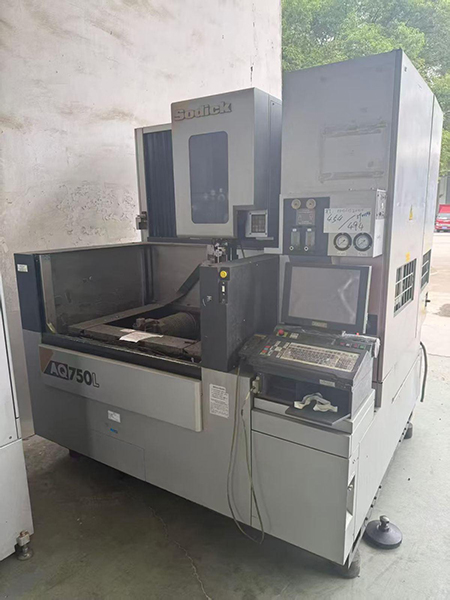
Used Sodick AQ750L Wire EDMThe Used Sodick AQ750L Wire EDM is a fully submerged wire-cut electrical discharge machine built in Japan by Sodick — a name that has led EDM technology for decades. This specific unit, stock number 812398, was manufactured in 2010 and is currently housed at our facility, where buyers can inspect it under power. X, Y, and Z axis travels come in at 700 × 500 × 400 mm, and the worktable measures approximately 1050 × 750 mm — giving the machine ample capacity for medium-to-large die and mold components without compromise. U/V axis travels of 770 × 520 mm enable complex taper cutting and simultaneous contouring that smaller wire EDMs simply cannot deliver. The wire diameter range spans 0.15–0.30 mm, so shops can switch between fast roughing and fine finishing on a single machine. That makes the AQ750L a genuine all-rounder for factories producing automotive dies, aerospace parts, medical devices, injection molds, and electronics tooling. For procurement managers evaluating a used wire EDM that can serve multiple production lines, this machine is a cost-effective, immediately available answer. Stock Status and buying value This AQ750L is physically in stock at our location — it is not a brokered listing, nor does it require sourcing from an overseas end user. Stock number 812398 can be visited, operated, and evaluated without delay. That level of transparency is uncommon in the used EDM market and gives buyers a decisive edge when verifying machine condition and production suitability. From a financial standpoint, a used AQ750L is a strategic acquisition. A comparable new wire EDM with similar travels and cutting envelope would typically list at a price several multiples above this pre-owned option, with delivery lead times stretching beyond three months in many regions. The immediate availability of this unit translates directly into production uptime: a factory can often integrate it into active operations within two weeks of purchase. When you factor in Sodick's robust parts supply and the wide network of independent EDM technicians, the total cost of ownership for a well-maintained 2010 AQ750L frequently undercuts both leasing and new purchase scenarios — while delivering the same fundamental cutting performance for most general machining tasks. Key Specifications and Production Readiness Every specification on the AQ750L has a direct impact on shop floor output. Below, we translate the numbers into practical meaning. Travels X/Y/Z: 700 × 500 × 400 mm. These are the programmable working strokes. A 700 mm X-axis means the machine can traverse fully across a long die plate without re-clamping. The 400 mm Z height accommodates thick molds, forging dies, and stacked components. Many smaller wire EDMs top out at 400–500 mm of X travel, limiting their ability to process longer parts in a single setup. Worktable size: 1050 × 750 mm. The table extends beyond the travels, providing generous room for clamping fixtures outside the cutting area. This matters on jobs that require precise alignment of large, irregularly shaped workpieces. U/V axis travel: 770 × 520 mm. The upper head moves independently in these axes, enabling accurate taper angles. For shops cutting die relief angles, draft angles on molds, or multi-level profiles, these generous strokes mean fewer compromises on part geometry. Maximum workpiece dimensions: 1050 × 750 × 400 mm. The machine tank and structure are built to immerse and cut a full-size block of this scale. Check your largest expected part size against these numbers — if it fits, the machine can likely handle the job. Wire diameter range: 0.15–0.30 mm. The 0.15 mm wire is indispensable for inside sharp corners and fine details typical of medical or electronic components. The 0.30 mm wire supports aggressive roughing, boosting material removal rates when cycle time is critical. Having both capabilities in a single machine eliminates the need for separate fine-wire and heavy-wire EDMs. Machine envelope: 2750 × 2050 × 2350 mm. Plan for a floor area of at least 3.0 × 3.5 meters to accommodate the dielectric tank, chiller, and operator workspace. The 2350 mm height clears standard factory ceilings, but confirm there are no overhead obstructions. Wire guide and linear drive: The AQ series is known for Sodick's linear motor drive on the X and Y axes in many configurations, which reduces mechanical wear and improves contouring accuracy. Even after years of service, these drives tend to hold repeatability better than conventional ballscrew drives — provided they have been kept clean and dry. Frequently Asked Questions Is this Sodick AQ750L wire EDM physically in stock and available to inspect?Yes. Stock number 812398 is located at our China facility. It is ready for on-site inspection and can be demonstrated under power upon appointment.What condition is the used AQ750L in — is it fully operational?The machine is sold in used condition. It is operational and available for testing during inspection. We recommend that potential buyers personally observe the machine running a test cut to verify its current accuracy, surface finish, and overall condition.What industries and parts does the AQ750L suit best?Its travels, taper capability, and wire range make it suitable for automotive die making, aerospace parts, injection molds, medical device components, and electronics tooling. Any shop needing a balance of large workpiece capacity and fine‑detail cutting will find this model appropriate.How do the travels of this machine compare to other used wire EDMs?With X/Y/Z travels of 700 × 500 × 400 mm, the AQ750L sits at the upper end of the medium‑size class. Many popular used wire EDMs have X travels around 400–500 mm, making this unit significantly more capable for long mold plates and dies.What are the most important aspects to check before buying?Key checks include: axis geometric accuracy (backlash, out‑of‑round), wear on wire guides and power contacts, dielectric system integrity, control functionality, and physical condition of the tank and table. See our full Inspection Points section above for detailed guidance.Can the machine be shipped internationally, and how soon could production start?Shipping can be arranged to most global destinations. After completion of inspection and payment, the machine can typically be prepared for transport within a few business days. The exact timeline to production start depends on local customs clearance and integration at the buyer's facility, but it is generally measured in weeks rather than months.
-
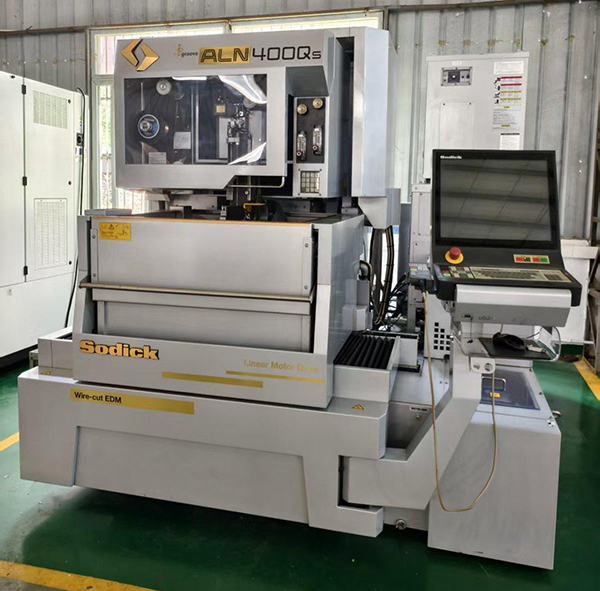
Used Sodick ALN400Qs Wire Cut EDMProduct Overview: This 2022 used Sodick ALN400Qs high-precision wire cut EDM (Stock No. 812336) represents an exceptional opportunity for manufacturers seeking near-new machining capabilities without the lead times and capital expenditure of a brand-new system. Manufactured in Japan and currently located in China, this machine features a 400 x 300 x 250 mm X/Y/Z axis travel, a maximum cutting thickness of 250 mm, and achieves an ultra-fine surface roughness of 0.19 μm Ra. Driven by Sodick's legendary linear motor technology, it is fully operational, ready for power-on inspection, and optimized for versatile, multi-industry applications including automotive, aerospace, medical devices, and precision mold making. Stock Status and buying value In today's fast-paced manufacturing environment, waiting months for a new high-precision wire EDM machine tool can result in missed contract opportunities. This used Sodick ALN400Qs, manufactured in 2022, offers an immediate-delivery solution. Having undergone minimal operational hours, the machine retains its original factory tolerances and structural integrity. Located in the industrial hub of China, this unit is positioned for rapid packing, export, and international shipping. For procurement managers and factory owners, purchasing this 2022 model delivers a significant cost-efficiency advantage. You receive a modern, linear-motor-driven machine that supports thin wire diameters down to 0.10 mm, allowing you to scale up production immediately upon installation. Live video inspections and on-site physical evaluations are available by appointment to facilitate quick commercial decisions. Key Specifications and Production Readiness The Sodick ALN400Qs is engineered for continuous, high-accuracy electrical discharge machining. Below are the verified technical parameters for Stock No. 812336. These specifications define the machine's physical capacity, electrical requirements, and performance limits in real-world production environments. Technical Parameter Specification Value Production Relevance & Capability Brand & Model Sodick ALN400Qs Premium Japanese brand utilizing linear motor drives for backlash-free motion. Stock Number 812336 Unique identifier for tracking, inspection, and commercial inquiry. Year of Manufacture 2022 Recent vintage ensuring modern CNC software, electronics, and minimal wear. Country of Origin Japan Renowned engineering standards, high-rigidity castings, and reliable assembly. Current Location Dongguan, China Available for immediate logistics, export clearance, and physical inspection. X / Y / Z Axis Travel 400 × 300 × 250 mm Accommodates medium-sized workpieces and multi-cavity progressive mold plates. U / V Axis Travel 150 × 150 mm Enables precise taper cutting and complex 4-axis geometry generation. Max. Workpiece Dimensions 600 × 470 × 240 mm Sufficient tank volume for standard mold bases and large component blanks. Max. Cutting Thickness 250 mm Handles thick tool steel blocks and heavy stamping die components. Electrode Wire Diameter Φ0.10 ~ Φ0.30 mm Versatility to run fine wire for micro-features or thicker wire for fast roughing. Best Surface Roughness 0.19 μm Ra Achieves near-mirror finishes, reducing or eliminating secondary polishing. Max. Cutting Speed 3.3 mm/min High-speed discharge control optimizes throughput on tool steels and carbide. Input Voltage 200 VAC Standard industrial power input compatibility. Max. Power Consumption 13 kVA Energy-efficient power supply design minimizes factory operating costs. Machine Dimensions Approx. 2190 × 2425 × 2205 mm Compact footprint allows easy integration into existing production lines. Machine Weight Approx. 3100 kg Heavy cast-iron base provides excellent vibration dampening for sub-micron accuracy. which operations should consider this machine now The "Versatile All-Rounder" designation of the Sodick ALN400Qs makes it an indispensable asset across a wide range of manufacturing sectors. Because it utilizes linear motors rather than traditional ball screws, there is no mechanical wear over time, ensuring that this used 2022 model performs with the same positioning accuracy as a new machine. Factories in the following sectors will find this machine highly suitable for their operations: 1. Precision Mold and Die Manufacturers For shops producing plastic injection molds or progressive stamping dies, the 0.19 μm Ra surface finish is a game-changer. It allows for the direct machining of core and cavity inserts with minimal manual polishing required afterward. The 400 x 300 mm travel is ideal for standard mold bases, while the U/V axis travel of 150 x 150 mm allows for highly accurate draft angles on extrusion dies and mold inserts. 2. Medical Device Components Medical manufacturing demands extreme repeatability and burr-free cutting. The ALN400Qs handles difficult-to-machine bio-compatible materials such as titanium, stainless steel, and nitinol with ease. Whether you are cutting surgical instruments, orthopedic implant components, or micro-fluidic mold plates, this machine's fine wire capabilities (down to 0.10 mm) allow for incredibly tight corner radii and intricate profiles. 3. Aerospace and Defense Machining Aerospace components often involve tough superalloys like Inconel and Hastelloy, which generate extreme tool wear on traditional milling machines. Wire EDM bypasses material hardness entirely. The Sodick ALN400Qs allows aerospace job shops to cut complex bracketry, turbine blade root profiles, and splines without introducing thermal stress or micro-cracking into the workpiece, adhering to strict aerospace quality standards. 4. Electronics and Semiconductor Tooling In the electronics sector, lead frames, connector molds, and high-density terminal tooling require sub-micron tolerances. The stable thermal design and rigid 3100 kg cast structure of the ALN400Qs prevent dimensional drift during long unattended operations, making it perfect for high-precision, multi-cavity electronic connector tooling. Frequently Asked Questions What is the current operational status of the Sodick ALN400Qs (Stock No. 812336)? The machine is fully operational and currently stored under power in Dongguan, China. All primary systems, including the linear motor drives, CNC controller, automatic wire threader, and dielectric filtration unit, are ready for live testing and inspection. Can I inspect this machine remotely? Yes, we regularly facilitate remote inspections for international buyers. We can arrange a live high-definition video call to show the machine powering up, executing axis movements, running the automatic wire threading cycle, and performing test cuts on a workpiece. How does the linear motor drive on this used Sodick compare to traditional ball screw machines? Unlike ball screws, which experience physical friction and gradual wear leading to backlash and loss of accuracy over time, linear motors are non-contact drives. This means a used 2022 Sodick ALN400Qs retains its original, sub-micron positioning accuracy indefinitely, making it a highly reliable long-term investment. What wire diameters can be used on this ALN400Qs model? The machine supports electrode wire diameters ranging from Φ0.10 mm to Φ0.30 mm. This allows you to run thin wire for high-precision micro-machining with tight corner radii, or thicker wire for rapid roughing operations on thicker workpieces. Are shipping and export logistics handled by your team? We can assist with coordinating the packing, securing, and loading of the machine into containers, as well as preparing export documentation from the port of Shenzhen/Guangzhou. Please specify your target port in your inquiry so we can provide an accurate logistics estimate.
-
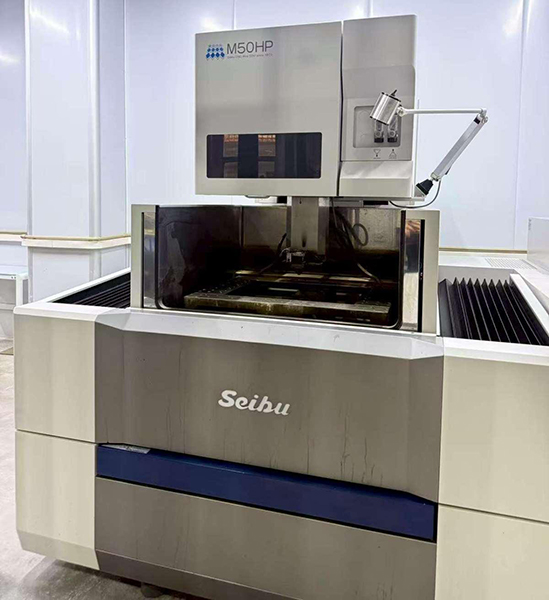
Used Seibu M50HP Wire EDMThe Seibu M50HP is a Japanese-engineered, ultra-precision wire electrical discharge machine (Wire EDM) designed for high-tolerance toolrooms and demanding production facilities. This particular used 2025 unit (Stock No. 812339), features a generous 500 × 400 × 310 mm X/Y/Z travel, the advanced AWF-4 automatic wire threader, and a maximum workpiece capacity of 800 kg. Available for immediate inspection and sale, this near-new machine offers manufacturers in aerospace, medical device, and precision mold-making industries an exceptional opportunity to acquire world-class Japanese EDM technology without the standard factory lead times. Stock Status and buying value Acquiring high-end Japanese wire EDM machinery typically involves navigating extensive lead times and significant capital expenditure. This 2025-manufactured Seibu M50HP, registered under stock number 812339, represents a rare market opportunity. Located in the industrial hub , the machine is fully assembled and positioned for immediate inspection. Because this is a 2025 model, it exhibits virtually no operational wear, offering the technical capabilities of a brand-new factory delivery but with immediate availability. For precision tooling shops and contract manufacturers facing sudden production demands or tight project deadlines, this unit bypasses the standard import and assembly delays. The physical presence of the machine allows technical teams to conduct direct accuracy verifications, axis movement tests, and system diagnostics prior to finalizing the transaction. Key Specifications and Production Readiness The Seibu M50HP is built on a high-rigidity cast iron structure designed to damp vibrations and maintain thermal stability during long-running, high-precision cuts. Below are the verified technical parameters for Stock No. 812339: Parameter Specification Value Brand / Origin Seibu / Japan Model M50HP Year of Manufacture 2025 X / Y / Z Axis Travel 500 × 400 × 310 mm U / V Axis Travel ±60 × ±60 mm Maximum Workpiece Dimensions Accommodates up to 300 mm thickness Maximum Workpiece Weight 800 kg Maximum Machining Speed 2.5 mm/min Wire Diameter Range Φ0.07 to Φ0.30 mm Automatic Wire Threader AWF-4 System Maximum Taper Angle ±10° at 300 mm thickness (Optional ±45° at 40 mm) Machine Footprint (W x D x H) 1830 × 2260 × 2035 mm Understanding the Technical Capabilities The 500 × 400 × 310 mm travel envelope allows this machine to handle medium-to-large mold plates and complex core inserts. The Z-axis travel of 310 mm is highly advantageous for tall extrusion dies and aerospace components, ensuring you are not limited by vertical clearance. With a maximum workpiece weight capacity of 800 kg, the machine's worktable supports heavy, solid steel blocks without compromising axis interpolation accuracy. This stability is critical when executing long, multi-pass finishing cuts where any table deflection would result in geometric errors. The integration of the AWF-4 Automatic Wire Feeder is a major driver of operational efficiency. It is designed to thread the wire reliably even in the water-filled machining gap, enabling true unattended overnight operations. If a wire break occurs during a complex cut, the AWF-4 system quickly rethreads at the point of interruption, minimizing machine downtime and protecting expensive workpieces from thermal or electrical marking. The taper capability of ±10° at a full 300 mm thickness (and up to ±45° at 40 mm with optional tooling) makes this machine highly versatile for cutting draft angles on plastic injection molds, extrusion dies, and specialized aerospace components. Frequently Asked Questions What is the current location of this Seibu M50HP, and can I see it run? The machine is currently located China. It is in stock and available for immediate physical inspection. Interested buyers can arrange a visit to inspect the machine's physical condition, power up the CNC system, and verify axis movements. What are the primary benefits of the Seibu AWF-4 system on this model? The AWF-4 is Seibu's fourth-generation Automatic Wire Feeder. It is highly regarded for its ability to thread wire through small start holes and directly through the guide gap even after a wire break. This drastically improves reliability during unattended overnight runs, directly increasing your shop's weekly spindle hours. Can this machine handle heavy workpieces for large mold bases? Yes. The Seibu M50HP features a highly rigid worktable and base casting designed to support workpieces weighing up to 800 kg. The physical travel of 500 × 400 × 310 mm allows you to easily position and secure substantial mold plates or large tooling fixtures. How does the 2025 manufacturing year affect the purchase decision? A 2025 manufacturing year means the machine is practically brand new, featuring the latest control software, generator design, and mechanical components. It offers the performance, accuracy, and reliability of a new machine but is available immediately without the factory wait times, providing excellent capital efficiency. What wire diameters are supported by Stock No. 812339? This unit supports a wire diameter range from Φ0.07 mm to Φ0.30 mm. This wide range allows you to configure the machine for high-speed roughing operations using thicker wires, or ultra-precise micro-machining and fine-finishing jobs using thin wires.
-
Used Charmilles ROBOFIL 440 CC Wire EDM SpecificationsThe Charmilles ROBOFIL 440 CC is a Swiss-engineered Wire EDM designed for high-precision machining. With a 350 x 220 x 220 mm work envelope, this unit is well-suited for mold making, medical device manufacturing, and small-batch aerospace components. Currently in stock and available for immediate inspection, this machine offers a cost-effective way to expand your EDM capacity without the lead times associated with new equipment. Core Specifications and Production Impact Brand Charmilles (Switzerland) Model ROBOFIL 440 CC X-Axis Travel 350 mm Y-Axis Travel 220 mm Z-Axis Travel 220 mm Wire Diameter 0.25 mm (Standard) Wire Speed 10 m/min Understanding these specifications is vital for evaluating production fit: Travel (350 x 220 x 220 mm): Defines the maximum physical dimensions of the workpiece you can process. Ideal for small-to-medium precision inserts, punches, and complex dies. 0.25 mm Wire Diameter: The industry standard for balancing cutting speed and surface finish, accommodating a wide range of tolerances in mold and die work. 10 m/min Wire Speed: Influences the throughput of the wire feed system. A consistent feed rate supports stable electrical discharge conditions during continuous cutting. Tooling Match and Part Fit The ROBOFIL 440 CC is a versatile, reliable workhorse in the EDM sector. Due to its Swiss design, it is frequently utilized in industries requiring high geometric accuracy, including: Mold Making: Ideal for creating intricate cavities, ejector pin holes, and complex core inserts. Medical Devices: Suitable for surgical instruments and micro-components where precision is non-negotiable. Aerospace: Capable of handling hardened alloys and exotic materials common in aerospace tooling. Electronics: Precision cutting for connectors, housings, and small-scale mechanical components. Tooling Match and Part Fit The ROBOFIL 440 CC is a versatile, reliable workhorse in the EDM sector. Due to its Swiss design, it is frequently utilized in industries requiring high geometric accuracy, including: Mold Making: Ideal for creating intricate cavities, ejector pin holes, and complex core inserts. Medical Devices: Suitable for surgical instruments and micro-components where precision is non-negotiable. Aerospace: Capable of handling hardened alloys and exotic materials common in aerospace tooling. Electronics: Precision cutting for connectors, housings, and small-scale mechanical components. Is This Machine Right for Your Production? This machine is a strong fit for your shop floor if: You need to increase capacity for small-to-medium precision parts immediately. Your current production involves mold components, dies, or medical-grade parts. You are looking for a proven, Swiss-made platform that balances cost with performance. You have the infrastructure to support standard 0.25mm brass wire EDM processes. Frequently Asked Questions Q: Can this machine accommodate parts larger than the 350mm travel? A: The 350mm travel is the effective cutting range. While the machine table may be larger, you cannot process features outside of the designated X/Y/Z travel limits. Always verify your largest part dimensions against these specifications. Q: Is the 0.25mm wire diameter fixed, or can it be changed? A: The 0.25mm configuration is the standard setup for this model. While some EDM machines allow for guide changes to accommodate different wire diameters, you should verify the specific tooling and guide set currently installed on this unit. Q: What type of factory environment is best suited for this machine? A: This machine is best suited for climate-controlled tool rooms or production environments that focus on precision machining, such as mold and die shops or medical device manufacturing facilities. Q: Is this machine ready for immediate production? A: Yes, this unit is in stock and available for immediate inspection. We encourage potential buyers to schedule a visit to verify the machine's operational status and fit for their specific production requirements.


