Used Mitsui VU65 Vertical Machining Center
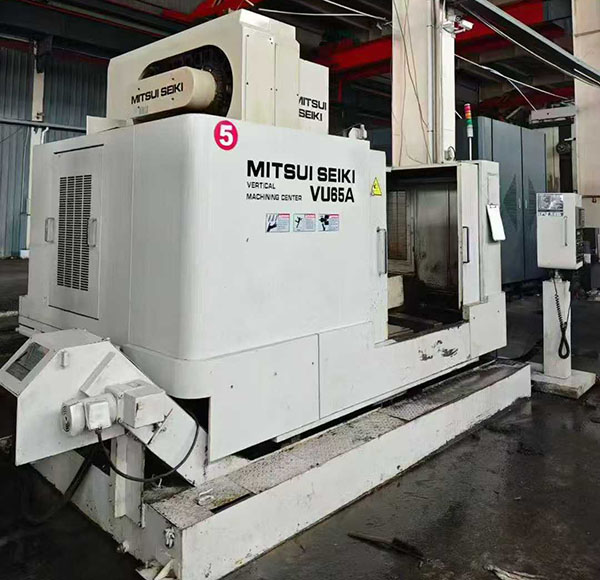
In the global precision manufacturing landscape, the strategic acquisition of used machine tools has become a vital method for enterprises to enhance production capabilities while managing capital expenditure. Among the elite tier of Japanese manufacturing equipment, the Mitsui Seiki VU65 Vertical Machining Center stands out as a symbol of structural integrity and enduring accuracy. Known for its heavy-duty design and high-torque performance, the Mitsui Seiki VU65 remains a highly sought-after asset in the secondary market, particularly for industries involved in complex mold making and large-scale component production.
This technical analysis focuses on the Mitsui Seiki VU65 (Stock No. 811110), a machine engineered to bridge the gap between high-precision finishing and aggressive material removal. By examining its core specifications—ranging from its robust box-way construction to its specialized gear-head spindle—we aim to provide procurement professionals with the insights necessary to evaluate this machine's potential impact on their production lines. Despite some missing data regarding its production year and current location, the inherent quality of Mitsui's engineering provides a solid foundation for industrial reliability.
Technical Specifications and Structural Capacity
The Mitsui Seiki VU65 is defined by its generous working envelope, designed to accommodate substantial workpieces. It features an X-axis travel of 1300mm, a Y-axis travel of 650mm, and a Z-axis travel of 700mm. This 1300mm longitudinal capacity is particularly advantageous for machining long structural parts or mounting multiple fixtures on the table simultaneously. The worktable itself measures 1400 * 600 mm, offering ample surface area for securing heavy molds and ensuring that the load distribution does not compromise the machine's geometric alignment during high-speed movements.
Underpinning this physical capacity is the Fanuc 16M CNC system. Fanuc systems are the gold standard in the used machine tools market due to their global support network and intuitive operator interface. The 16M series provides the computational power required for complex 3-axis simultaneous movements and high-resolution feedback. For a pre-owned machine, the presence of a Fanuc controller ensures that finding qualified operators and integrating the machine into existing CAD/CAM workflows remains a straightforward process, minimizing the learning curve and deployment time.
The Powerhouse: BT50 Gear-Head Spindle Performance
One of the most critical features of the Mitsui VU65 is its spindle configuration. Equipped with a BT50 taper, this machine is built for heavy-duty industrial tasks. The BT50 interface provides a significantly larger contact area and clamping force compared to the lighter BT40 standard, which translates directly into superior vibration dampening and higher accuracy during aggressive milling operations. The spindle speed ranges from 10 to 6000 RPM, a specification that highlights its optimization for high-torque applications rather than high-speed aluminum trimming.
The inclusion of a Gear Head transmission is a defining characteristic of the Mitsui Seiki VU65's power delivery. Unlike belt-driven spindles which may slip under extreme loads, or direct-drive spindles that often lose torque at lower speeds, the gear-driven system maintains maximum power throughout the lower RPM range. This makes the Mitsui Seiki VU65 exceptionally capable of handling tough materials such as titanium, stainless steel, and hardened tool steels. For shops specializing in roughing operations or large-diameter boring, this spindle design offers a level of reliability and metal removal rate that modern high-speed machines often cannot match.
Rigidity and Precision: The Advantage of Box-Way Construction
In the realm of used machine tools, the choice between linear guides and box ways is often a deciding factor for specific applications. The Mitsui Seiki VU65 utilizes 3-axis box ways (hard rails), a design choice that prioritizes rigidity and damping over rapid traverse speeds. Box ways consist of wide, flat surfaces that are typically induction hardened and precision ground. The large contact area between the moving components and the machine base allows for the effective dissipation of cutting forces and thermal energy, ensuring that the machine remains stable even during interrupted cuts or heavy face milling.
The structural damping provided by box ways is essential for maintaining high surface finish quality on large workpieces. While linear guides excel in high-speed positioning, box ways prevent the "chatter" that can occur when a large cutter engages with a hard workpiece. This makes the Mitsui Seiki VU65 an excellent choice for finishing operations where dimensional tolerance and surface integrity are paramount. For any manufacturing facility looking to produce parts with long-term consistency, the inherent stability of a box-way machine like the Mitsui Seiki VU65 is a significant technical advantage.
Industrial Applications and Production Line Integration
The combination of a 1300mm X-axis and a high-torque BT50 spindle positions the Mitsui Seiki VU65 as a versatile workhorse across several high-value sectors. In the automotive industry, it is ideally suited for the machining of engine blocks, transmission housings, and suspension components. Its ability to perform heavy-duty drilling and tapping in cast iron or steel makes it a reliable choice for Tier 1 and Tier 2 suppliers who require consistent throughput and the ability to handle large parts that exceed the capacity of standard 1000mm machines.
Beyond automotive, the Mitsui Seiki VU65 is a staple in the heavy machinery and energy sectors. It can be utilized for machining large valves, pump housings, and components for construction equipment. The 20-tool Automatic Tool Changer (ATC) allows for complex multi-stage processing without manual intervention, supporting high-efficiency production cycles. For a facility looking to diversify its output, the Mitsui Seiki VU65 provides the mechanical "muscle" needed to take on projects that require both significant material removal and high-precision finishing, all within a single setup.
Conclusion: The Lasting Value of Mitsui Engineering
The Mitsui Seiki VU65 Vertical Machining Center represents a pinnacle of Japanese machine tool design, balancing power, size, and precision. Its BT50 gear-driven spindle and robust box-way architecture make it a formidable competitor in the used machine tools market, offering capabilities that many newer, lighter machines lack. Whether it is being used for heavy-duty roughing or precision mold finishing, the VU65 provides a stable platform that empowers manufacturers to meet the most demanding client specifications with confidence.
In summary, for companies looking to expand their machining capacity with a reliable and powerful vertical machining center, the Mitsui Seiki VU65 is an outstanding candidate. By understanding the specific mechanical advantages of this model—such as its high torque and superior vibration damping—decision-makers can make an informed choice that aligns with their long-term production goals. In an era where efficiency and reliability are the keys to competitiveness, the Mitsui VU65 remains a relevant and valuable tool for the modern machine shop.
FAQ
Q1: What makes the BT50 gear-head spindle on the Mitsui Seiki VU65 special?
A: The BT50 taper provides high rigidity, while the gear-head transmission multiplies torque at low speeds. This allows the machine to perform heavy-duty cutting on hard materials that would stall a standard belt-driven or high-speed spindle.
Q2: Is the Fanuc 16M system still viable for modern manufacturing?
A: Yes, the Fanuc 16M is a highly reliable and widely understood system. It supports standard G-code and can be integrated with modern CAM software, making it a practical choice for most industrial machining tasks today.
Q3: What are the benefits of 3-axis box ways (hard rails) for this machine?
A: Box ways offer a large contact surface area, which provides excellent vibration damping and structural rigidity. This is crucial for heavy cutting and for achieving high-quality surface finishes on tough workpieces.
Q4: How does the 1300mm X-axis travel benefit my shop?
A: The 1300mm travel allows you to machine larger parts, such as automotive engine components or long mold bases, which wouldn't fit on standard small-to-medium machining centers, thus expanding your project capabilities.
More Articles
-
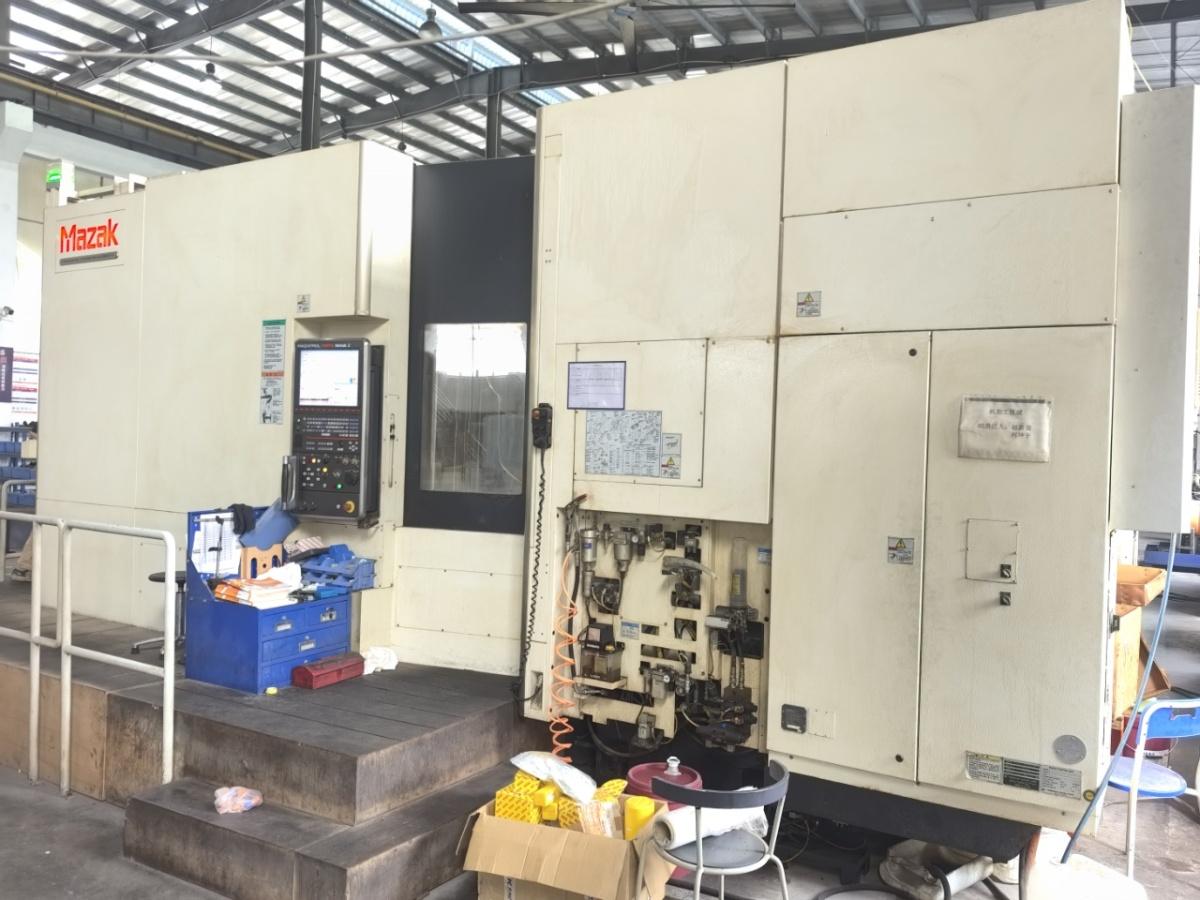
Can Third-Party Machine Inspection Be Arranged Before Shipment?When purchasing used industrial CNC machine tools from international suppliers, one of the most frequently asked questions from factory buyers and machinery traders is whether third-party machine inspection is allowed before shipment. For high-value equipment such as horizontal machining centers, verifying machine accuracy, operating condition, and original configuration is essential to avoid purchasing risks. The clear and official answer is yes. We fully support complete third-party on-site inspection and pre-shipment testing for our in-stock 2015 Japan original MAZAK HCN8800-II Horizontal Machining Centre (Inventory No. 68596). Buyers can arrange their own engineers or internationally recognized inspection institutions to conduct full machine verification before delivery. Why Pre-Shipment Inspection Is Important for Used HMC Machines Horizontal machining centers are core industrial equipment used for high-precision mass production. Unlike ordinary mechanical equipment, CNC HMC machines require stable spindle performance, precise axis positioning, and consistent repeat accuracy during long-term processing. For cross-border second-hand machine transactions, information asymmetry is the biggest concern for buyers. Through professional third-party inspection, customers can confirm the machine’s manufacturing year, original configuration, running status, machining accuracy, and overall mechanical condition on-site. This inspection process greatly reduces purchasing risks and ensures the machine fully meets factory production standards after arrival. Supported Inspection Items for MAZAK HCN8800-II To ensure full transparency of machine condition, we allow all-round unrestricted inspection for the stocked MAZAK HCN8800-II. All inspection work can be carried out under power-on running status. Inspectors can check the complete machine configuration, including the original MAZATROL MATRIX NEXUS2 CNC system, system version, operating hours, and electronic control status. Meanwhile, full stroke testing of the X, Y, and Z axes, fast movement testing, and precision calibration are permitted. Spindle rotation accuracy, tool magazine operation, pallet switching function, and hydraulic system status can also be fully verified. In addition, inspectors are allowed to take photos, record running videos, measure geometric accuracy, and check the overall appearance and structural integrity of the machine. Full Specifications of Stocked 2015 MAZAK HCN8800-II This available Mazak horizontal machining center is a Japan-made 2015 model with complete original factory configurations, suitable for heavy-duty and high-precision industrial processing. The machine adopts a three-axis travel of 1400mm × 1200mm × 1325mm, providing a large machining range for medium and large workpieces. It is equipped with dual 800mm × 800mm worktables, supporting automatic pallet exchange to achieve uninterrupted batch production. The maximum worktable load reaches 2200KG, which meets heavy cutting requirements for steel, cast iron, and alloy workpieces. The spindle distance from the worktable ranges from 100mm to 1275mm, with a maximum machining diameter and height of 1450mm. The worktable indexing resolution is as accurate as 0.001 degrees, ensuring ultra-precise multi-angle positioning. Equipped with a high-performance BT50 spindle, the maximum spindle speed reaches 10,000 rpm, balancing high cutting efficiency and smooth surface machining quality. The machine is fitted with a 60-station automatic tool magazine, supporting automatic tool change. The maximum tool length is 800mm, and the maximum tool weight is 30KG, adapting to various complex machining processes. The X, Y, and Z axes adopt a high-speed moving design, with a fast feed rate of 60,000 mm/min for all three axes, effectively improving overall production efficiency. Inspection Rules and Shipment Arrangement For international orders, the third-party inspection process is arranged after preliminary order confirmation. The machine will be kept in complete standby status for testing. The inspection date can be freely confirmed according to the buyer’s schedule. Generally, the inspection fee and travel expense of the third-party organization are borne by the buyer. After the inspection is completed and the machine condition is confirmed qualified, we will arrange professional disassembly, packaging, and international shipping procedures. Suitable Industries for MAZAK HCN8800-II This Mazak HCN8800-II horizontal machining center is widely applicable for aerospace parts, automotive components, mold processing, engineering machinery parts, and precision mechanical parts manufacturing. With high rigidity, stable precision, and high automation, it is an ideal device for enterprises that need large-scale continuous multi-surface machining. Final Conclusion Transparent pre-shipment inspection is the most effective guarantee for cross-border used CNC machine purchases. We sincerely support full third-party inspection for our stocked 2015 Japanese MAZAK HCN8800-II Horizontal Machining Centre. Every customer can confirm the real machine condition on-site before shipment, ensuring safe, reliable, and risk-free equipment procurement.
-
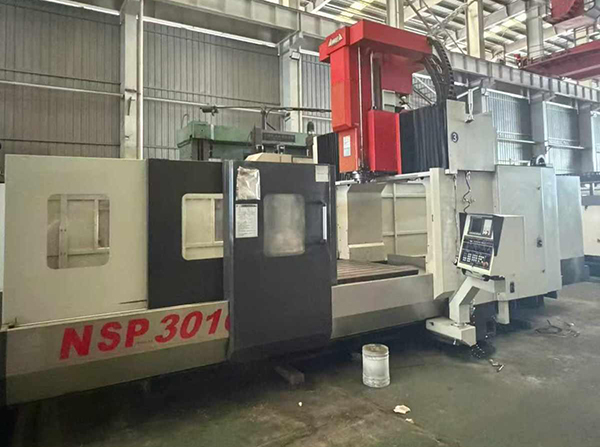
Can I arrange a third-party inspection before shipment for AWEA NSP3016 Gantry Machining Centre?Overview of AWEA NSP3016 Gantry Machining Centre The AWEA NSP3016 Gantry Machining Centre is a high-performance, heavy-duty CNC gantry milling machine originating from Taiwan, China. Manufactured in 2018, this reliable second-hand gantry machine has stable mechanical structure, high machining precision and super heavy load capacity, widely used in mold processing, mechanical equipment manufacturing, automotive parts, hardware processing and large industrial workpiece production. For international buyers who care about machine quality, arranging a professional third-party inspection before shipment is fully acceptable and supported. We provide complete inspection conditions, open machine test cutting, precision detection and full condition verification to guarantee the machine meets industrial standard requirements. Basic Machine Information & Inventory Details This AWEA NSP3016 gantry machining centre is available in stock with complete and clear machine information for customer verification. The detailed machine profile is as follows: • Inventory Number: 812669 • Brand: AWEA • Model: NSP3016 • Origin: Taiwan, China • Manufacturing Year: 2018 All machine data is true and consistent with the physical machine. No modification, no hidden faults and no overhaul records. The whole machine maintains original factory structure and stable running performance, suitable for long-term factory continuous production. Main Technical Specifications and Processing Capacity The AWEA NSP3016 gantry machining centre owns large processing travel and super heavy bearing capacity, which can meet most large-scale and heavy-duty processing demands. Three-axis travel reaches 3060 × 1600 × 760 mm, providing ultra-large processing space for large molds and oversized workpieces. The worktable size is 3000 × 1500 mm, with a maximum load capacity up to 10,000 kg, supporting heavy workpiece clamping and cutting. The gantry width is 1700 mm and gantry height is 1200 mm, ensuring rigid gantry structure, strong stability and no vibration during high-precision cutting. Equipped with a standard 24-position tool magazine, the machine realizes automatic tool changing, reduces manual operation time and greatly improves production efficiency. It can complete batch processing of multi-process workpieces efficiently. Professional Configuration and Processing Advantages This AWEA NSP3016 gantry machining centre is equipped with a practical side milling head configuration, which greatly enriches the machine’s processing functions. Except for conventional plane milling, drilling and tapping, it can complete side milling, inclined surface processing and multi-angle complex workpiece forming processing. One-time clamping can realize multi-surface processing, effectively improving workpiece precision consistency and reducing secondary clamping errors. With rigid gantry body design, high-precision guide rail and stable spindle system, the machine features small cutting error, smooth workpiece surface and stable long-term working accuracy. It is very suitable for high-standard processing requirements of mold factories and precision machinery enterprises. Pre-shipment Third-Party Inspection Support We fully support customers to arrange third-party inspection before shipment for the AWEA NSP3016 gantry machining centre. During the inspection period, we can provide power-on test run, actual cutting test, precision parameter detection, mechanical structure inspection and electrical system checking. All machine parameters, appearance performance and working conditions can be fully verified by the customer’s designated inspection institution. We adhere to transparent machine condition, honest trading and full cooperation with pre-shipment inspection, ensuring every imported machine is in good working condition for overseas buyers.
-
Used Mazak INTEGREX e-1060V/8 II 5-Axis Machining CenterThe Mazak INTEGREX e-1060V/8 II is a high-capacity, multi-tasking machining center designed for complex, heavy-duty production environments. This specific unit, currently in stock and available for inspection, offers a comprehensive "Done-in-One" solution, integrating turning and milling capabilities into a single setup. With a substantial X-axis travel of 1875 mm and a robust BT50 spindle, this machine is engineered for manufacturers requiring high-precision contouring and heavy material removal on large-scale components. Whether your shop handles automotive engine blocks, aerospace structural parts, or large-scale industrial molds, this machine provides the versatility to reduce setup times and improve part accuracy through its 5-axis simultaneous control. Key Specifications and Production Readiness Understanding the technical specifications of the INTEGREX e-1060V/8 II is essential to determining its fit for your specific part geometries. This machine is built for large-part machining, with a significant work envelope and high-torque capabilities. Specification Detail Model INTEGREX e-1060V/8 II X/Y/Z Travel 1875 × 1060 × 1345 mm Table Size 1000 × 1000 mm B-Axis Range ±150° C-Axis Range 360° Spindle Taper BT50 Spindle Speed 5000 rpm Tool Magazine Capacity 80 tools Max Workpiece Dimensions 1250 mm (Diameter) × 1250 mm (Height) Indexing Accuracy 0.001° Pallet Speed 500 rpm Production Implications: Large Envelope: The 1875 mm X-axis travel combined with the 1250 mm workpiece height capacity makes this machine suitable for large, heavy castings or weldments. Tooling Flexibility: The 80-tool magazine capacity reduces the need for manual tool changes during complex cycles, allowing for "lights-out" or extended unattended operation. Heavy-Duty Cutting: The BT50 spindle interface provides the rigidity required for heavy-duty roughing operations, while the 5000 rpm speed maintains the surface finish requirements for finishing passes. 5-Axis Contouring: The combination of the ±150° B-axis and 360° C-axis allows for complex part geometry machining in a single setup, minimizing the human error associated with re-fixturing parts. Why This Machine is worth considering now In the current market, finding a 5-axis machining center with this specific work envelope (1875 mm X-axis) that is immediately available is rare. Many shops are currently facing long lead times for new equipment. This Mazak INTEGREX e-1060V/8 II represents a "ready-to-work" asset. Because it combines turning and milling, it effectively replaces multiple machines on the shop floor, saving valuable floor space and reducing the logistics of moving parts between stations. Its versatility means it is not tied to a single product line. If your production mix changes, this machine has the technical capability to pivot to different part types, from heavy automotive castings to complex aerospace geometries, making it a sound long-term capital investment. Frequently Asked Questions Q: Is this machine available for immediate inspection? A: Yes, this unit is currently in stock and is available for inspection. Please contact our sales team to arrange a visit for your technical personnel. Q: Can this machine handle heavy-duty roughing? A: Yes, the machine is equipped with a BT50 spindle, which is designed for high-torque, heavy-duty material removal, making it suitable for large components. Q: What is the primary advantage of the 80-tool magazine? A: The 80-tool capacity significantly reduces downtime for tool changes, especially in high-mix environments where different jobs require a large variety of tooling. It allows for longer unattended production runs. Q: Is this machine suitable for small parts? A: While capable, it is optimized for larger workpieces (up to 1250 mm). It may be over-specified for small, simple parts, but it is an ideal solution for complex, large-scale production. Q: How do I proceed with an inquiry? A: You can submit an inquiry through our contact form. Please include your company details and any specific questions regarding the machine's specifications or logistics to expedite the process.
-
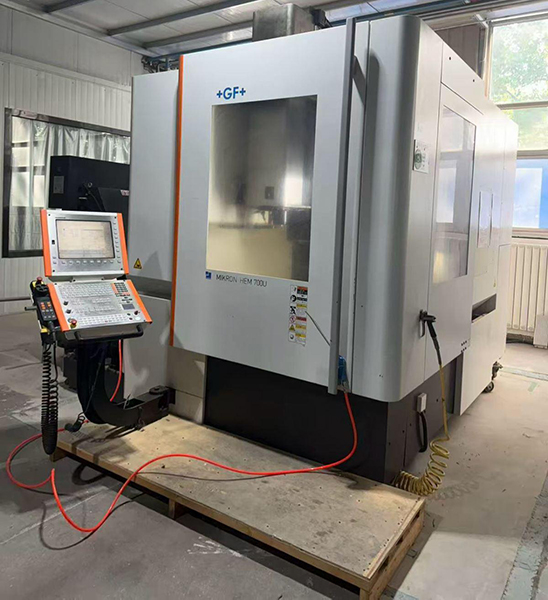
Is This Mikron HEM 700U available for inspection?Yes. This Mikron HEM 700U 5-axis machining center is presented with a clear stock number, known site location in China, and a defined technical configuration, so it is a practical candidate for buyer inspection and shortlist evaluation. For a purchaser comparing versatile 5-axis machines, the listing gives enough concrete data to decide whether an on-site check is worth scheduling. What Makes This HEM 700U Inspection-Ready for a Buyer? Inspection readiness starts with traceable identity and enough published information to prepare a useful visit. Here, the stock number is 812573, the brand is Mikron, the model is HEM 700U, and the machine is located in China. That means a buyer is not looking at a vague 5-axis listing; you can align your team around one known machine and build a proper inspection checklist before travel. The control system is identified as Heidenhain iTNC 530, which is important because many aerospace, mold, and precision component shops already know how to assess that platform. A buyer can arrive ready to verify axis feedback behavior, rotary positioning, tool change logic, and basic program handling rather than spending the first half of the inspection identifying the control package. The core motion envelope is also fully stated: X/Y/Z travel of 700 x 600 x 500 mm, B-axis tilt from -65 degrees to +110 degrees, and C-axis with continuous 360-degree rotation. Those details let a buyer decide in advance whether the machine can physically support target work such as angled housings, impellers, mold cavities, orthopedic parts, or multi-face electronic components. Is the Mikron HEM 700U Broad Enough for Mixed Production Work? Yes, and that is one of the strongest reasons to inspect it. This is the kind of machine buyers consider when they want one machine for many applications rather than a narrow single-part solution. The 5-axis linked machining capability, 12,000 rpm built-in motor spindle, and 630 x 630 mm table support a wide spread of jobs across automotive, aerospace, mold making, medical devices, and electronics. For automotive work, the machine can suit multi-side machining of fixture plates, transmission-related parts, or prototype aluminum components where angle access matters. In aerospace, the B- and C-axis movement makes it relevant for complex prismatic parts, brackets, and light-alloy structural details that benefit from fewer setups. In mold making, the 5-axis format supports cavity access and tool approach flexibility, especially where compound angles reduce manual repositioning. Medical device and electronics buyers may also find the platform attractive because the travel range is balanced rather than oversized, and the spindle speed and control combination fit precision milling scenarios. The listed tool interface options—ISO 40, HSK-A63, BT40, and CAT40—also give buyers a useful negotiation point: they should confirm the exact spindle taper installed, because that affects tool inventory compatibility and changeover cost after purchase. What Should a Buyer Verify On Site Before Negotiating? A serious inspection should focus on the specs that most directly affect production fit and post-purchase integration. First, verify simultaneous 5-axis operation, not just indexed movement. Since the listing states 5-axis linkage, buyers should request a live demonstration with coordinated B- and C-axis motion under the Heidenhain control. That helps confirm whether the machine matches true multi-surface machining needs. Second, check the pallet system details. The machine is listed with a 30-position pallet system and notes that different pallet system configurations are possible. That can be valuable for shops planning unattended throughput, mixed-part scheduling, or future automation, but the exact configuration on the floor should be confirmed during inspection. Third, inspect the robot interface if automation matters to your line plan; the listing says robot interface support is available, so buyers should verify physical interface condition and integration scope. Finally, review rapid traverse at 30 m/min, spindle response, table condition, and overall travel smoothness across the 700 x 600 x 500 mm envelope. These checks help determine whether the machine is a good candidate for negotiation now or whether additional proof is needed. In short, the listing already justifies inspection because it provides enough factual structure for a real purchase decision, not just general interest. Related Questions Is This Mikron HEM 700U in China available for inspection? Yes. The listing includes a stock number, exact model, location in China, control system, and key 5-axis specifications, which is enough to justify arranging an inspection. Can I assess production fit before visiting this Mikron HEM 700U? Yes. The published travels, spindle speed, 5-axis movement, table size, and control type allow a buyer to pre-screen the machine for target parts and industries. What is the most important thing to verify during inspection? Confirm true 5-axis linked machining in operation, then verify the installed tool interface, pallet system configuration, and robot interface status. Is this HEM 700U suitable for more than one type of industry? Yes. Its 5-axis format supports varied work in automotive, aerospace, mold making, medical devices, and electronics.